
Injection Molding for Automotive
Undercuts in Automotive Clips: Slides, Lifters and Design Alternatives
Choose slides, lifters, pass-through cores or clip redesign by release direction, stroke, wear, cooling, appearance and validation risk.

Choose slides, lifters, pass-through cores or clip redesign by release direction, stroke, wear, cooling, appearance and validation risk.
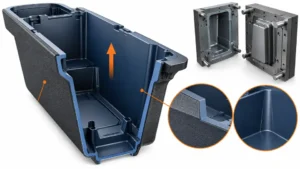
Review draw direction, wall depth, grain, draft, ejection and appearance zones before releasing a deep automotive console housing mold.
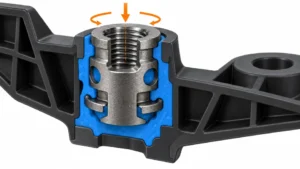
Design metal-to-plastic insert molding around load paths, mechanical interlocks, interface condition, thermal stress and verification evidence.
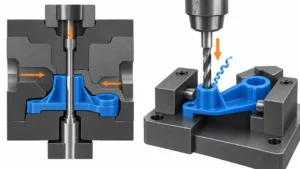
Compare molded and post-machined small holes by core-pin support, tolerance, burrs, datum control, cycle, validation and lifetime cost.
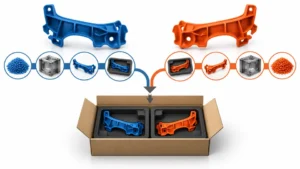
Control LH/RH part identity, ratios, revisions, cavity traceability, kitting and shortages when automotive parts must arrive as matched sets.
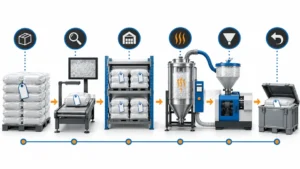
Define receiving, storage, drying, traceability, loss allowance and unused-stock responsibility when an automotive customer supplies resin.

Compare two automotive molding tool options with a transparent break-even calculation, volume scenarios, capacity limits and validation costs.

Reconcile purchase order, drawing, CAD, quote, material, quantity and validation conflicts before automotive tooling commitment.

Agree the exact VOC or fogging method, sample state, handling, laboratory scope and acceptance criteria before molding test samples.

Check UL 94 material records by exact resin grade, color and minimum thickness while keeping finished-part automotive requirements separate.