
Vehicle-Environment Review
Automotive Exterior Plastic Components for Weather and Appearance Demands
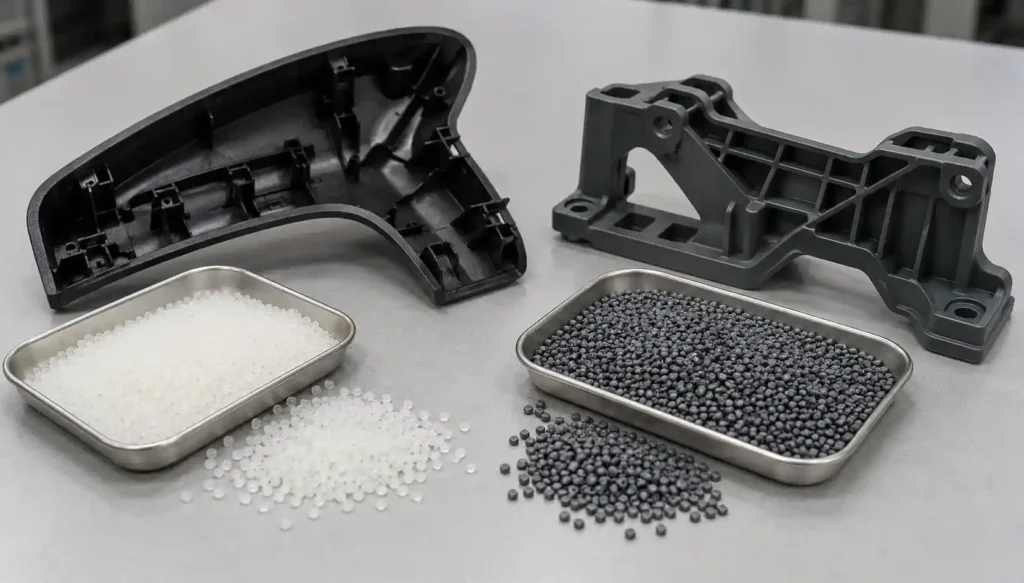
Relevant parts include exterior trim and garnish substrates, wheel-area covers, brackets, caps, camera or sensor housings, lighting support parts, underbody features and service components.
Installed Conditions and Common Failure Drivers
Exterior components see UV, rain, road splash, temperature cycling, stone impact, cleaners, fuels or oils depending on location, and visible color or gloss requirements. Attachment design must tolerate body movement and assembly variation.
Questions to Answer Before DFM and Quotation
The customer supplies the applicable vehicle, OEM, legal, and product-safety requirements.
Where is the exposure?
Map direct UV, rain, road splash, stones, mud, cleaners, fuels/oils, heat sources, low-temperature impact, and visible color/gloss requirements by part surface.
What body interfaces move?
Define clips, fasteners, seals, datum strategy, thermal expansion allowance, gap/flush, drainage, camera/sensor/lighting interfaces, and service access.
Is there a finish operation?
Provide molded-color, paint, plating, coating, masking, adhesion, surface-energy, texture, and cosmetic-defect criteria before gate and steel decisions.
Manufacturing Assessment for This Application
The exact geometry, grade, mating parts, finish, and test plan determine which risks apply.
Weather and impact design
Assess exact grade stabilization, wall and rib transitions, notch sensitivity, weld lines at attachments, drainage, sealing, and impact load paths.
Large-part dimensional control
Review gate sequencing, cooling, shrinkage, attachment span, fiber direction, ejection, and fixture/conditioning strategy for gap and flush.
Finish-compatible molding
Locate gates, parting, vents, ejectors, flow marks, and repair zones around the approved paint/coating/texture process and appearance boundary.
Material Selection Boundary
UV-stabilized PP compounds, PC/ABS, reinforced PA or PBT, TPE/TPU and other grade-specific materials may be considered. Weathering, paint or plating compatibility, low-temperature impact and dimensional stability must be validated for the exact grade and finish.
Final selection must follow the controlled drawing and applicable approved-material requirements for the exact grade, color, reinforcement, thickness, conditioning, processing, and validation plan. Material-family guidance is not a product approval.
Validation Basis to Define
- Conditioned dimensional or fixture results for controlled body interfaces, attachment spans, gap/flush, and sealing features.
- Color, gloss, texture, paint/coating adhesion, and agreed cosmetic boundary samples.
- Specified UV/weathering, thermal cycling, low-temperature impact, stone impact, chemical/fluid, and water-management tests.
- Assembly, clip/fastener, camera/sensor/lighting alignment, or leak evidence when applicable to the released design.
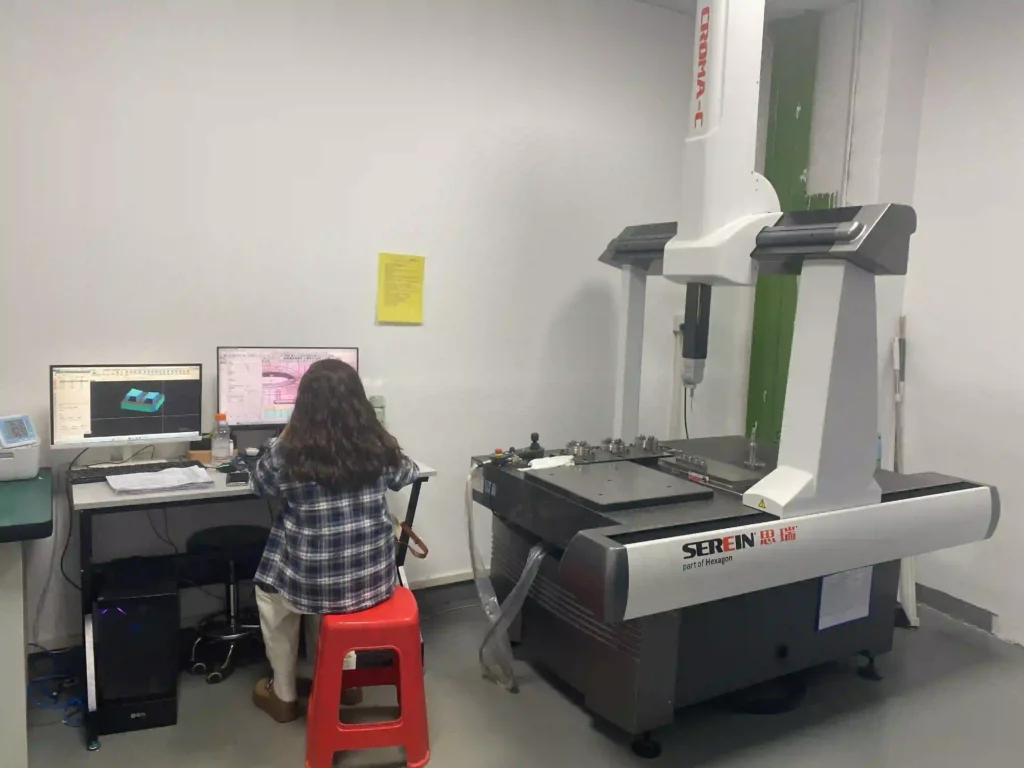
Test standard, specimen or finished-part requirement, conditioning, sample quantity, laboratory, acceptance limit, and approval owner must be assigned before testing.
Best-Fit Project Route
Exterior parts typically need DFM and tool planning tied to surface and body-interface risk; mature tools may enter transfer or repeat production after compatibility review.
Use the materials guide for polymer-family context and the services hub for the stage-specific workflow.
Review Exterior Plastic Components Requirements
Send the part location, function, current stage, and available drawing/material/validation baseline for an application-specific manufacturing review.