
Vehicle-Environment Review
Automotive Interior Plastic Components: Design and Molding Considerations
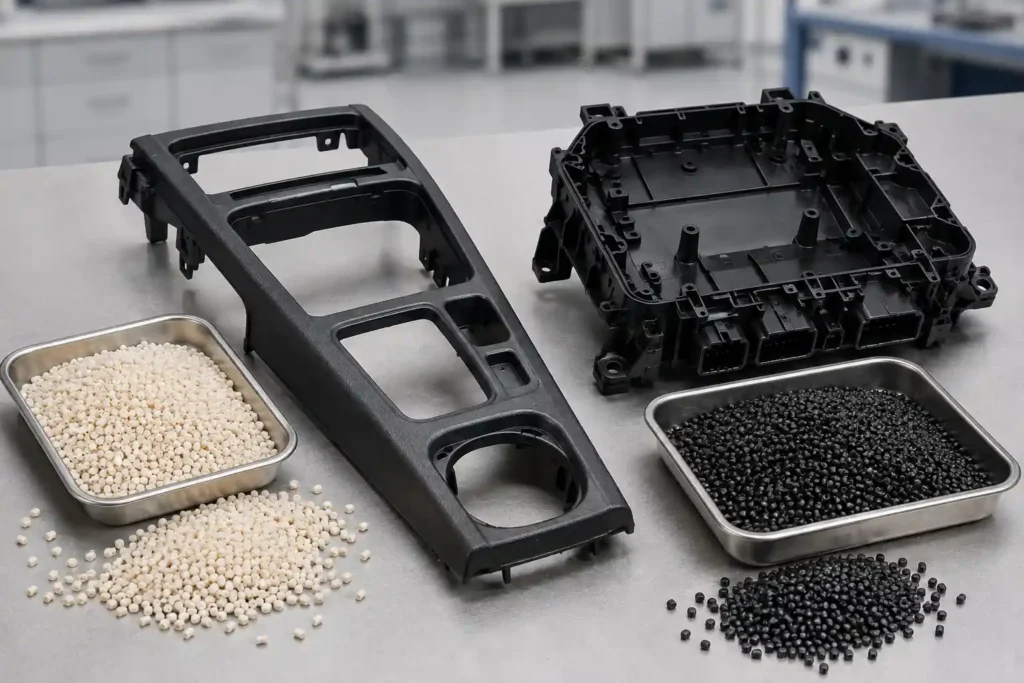
Typical programs include trim carriers, console and dashboard components, bezels, storage features, HVAC interfaces, seat-related covers, clips, brackets and switch housings.
Installed Conditions and Common Failure Drivers
Interior parts face occupant contact, heat cycling, vibration, cleaning chemicals, odor and VOC expectations, sunlight through glazing, squeak-and-rattle risk and closely judged appearance. Hidden carriers and Class-A trim require different priorities.
Questions to Answer Before DFM and Quotation
The customer supplies the applicable vehicle, OEM, legal, and product-safety requirements.
Visible or hidden?
Identify Class-A and occupant-visible zones, grain direction, gloss/color boundaries, paint or decoration, witness-line limits, and acceptable ejector/gate locations.
How does it assemble?
Define datums, clip insertion and retention, screw torque, mating gaps, squeak/rattle interfaces, service cycles, and allowed assembly force.
What cabin exposures apply?
Provide heat and solar load, cleaner/chemical contact, scratch/mar use, odor/VOC/fogging limits, impact requirements, and the controlled material standard.
Manufacturing Assessment for This Application
The exact geometry, grade, mating parts, finish, and test plan determine which risks apply.
Show-surface protection
Review wall transitions, rib/boss read-through, gate and weld-line location, ejection, texture draft, cooling balance, and polishing or texture readiness.
Gap, flush, and clip behavior
Use the actual datum scheme and mating-part stack to assess warpage, shrinkage direction, clip-root stress, and fixture or conditioning needs.
Material and finish process
Evaluate the exact PP, ABS, PC/ABS, TPE, or other grade with color, emissions, texture, coating, and lot-control requirements—not only the polymer family.
Material Selection Boundary
PP and talc-filled PP are common for larger trim and carriers; ABS and PC/ABS are used where appearance, impact or heat performance is needed; PA, POM and TPE may suit clips, mechanisms or soft-touch features. Exact grade, emission limits and OEM material lists govern selection.
Final selection must follow the controlled drawing and applicable approved-material requirements for the exact grade, color, reinforcement, thickness, conditioning, processing, and validation plan. Material-family guidance is not a product approval.
Validation Basis to Define
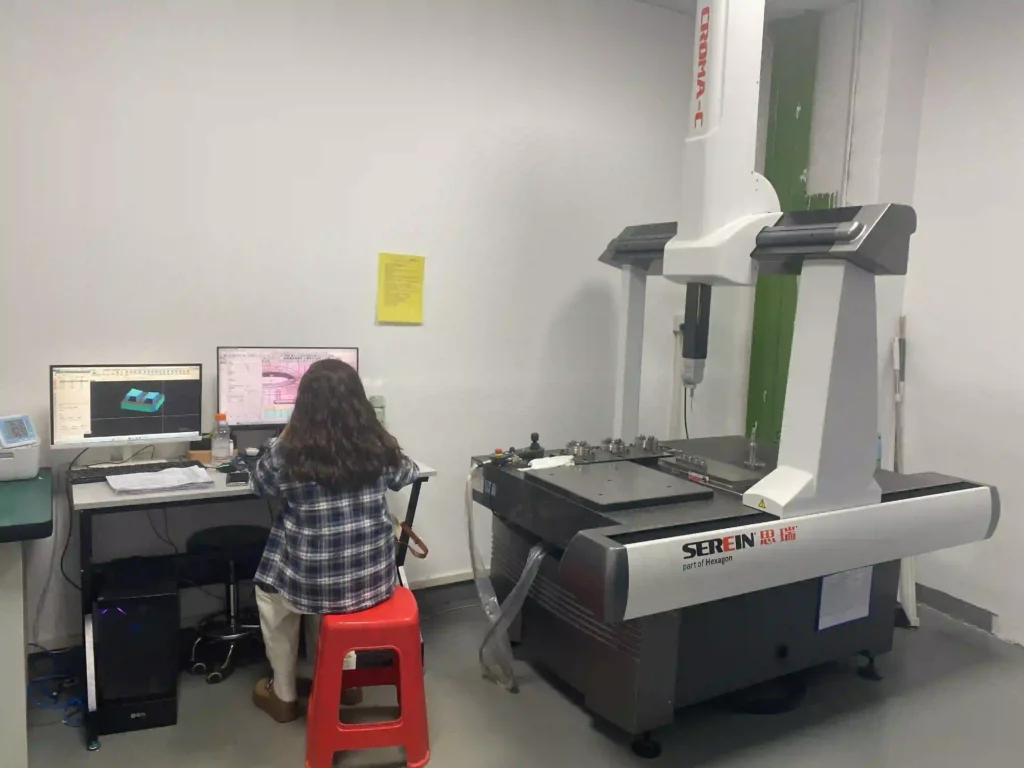
- Dimensional results in the specified conditioning state, using agreed datums and cavity identification.
- Approved color, gloss, grain, surface, gate, weld-line, and boundary samples where appearance is controlled.
- Assembly fit, clip insertion/retention, torque, squeak/rattle, or service-cycle evidence when specified.
- Customer-defined heat, impact, scratch, chemical, odor, VOC, fogging, and flammability evidence for the exact part/grade when required.
Test standard, specimen or finished-part requirement, conditioning, sample quantity, laboratory, acceptance limit, and approval owner must be assigned before testing.
Best-Fit Project Route
Interior application review connects most often to DFM for appearance and assembly decisions, then new mold or repeat production after the approval evidence is defined.
Use the materials guide for polymer-family context and the services hub for the stage-specific workflow.
Review Interior Plastic Components Requirements
Send the part location, function, current stage, and available drawing/material/validation baseline for an application-specific manufacturing review.