Application Assessment

Automotive Applications by Use Environment

Interior, exterior, under-hood, and EV/electrical parts can use the same molding process while requiring very different material, tooling, appearance, assembly, and validation decisions. Start with the installed environment and controlled requirements.

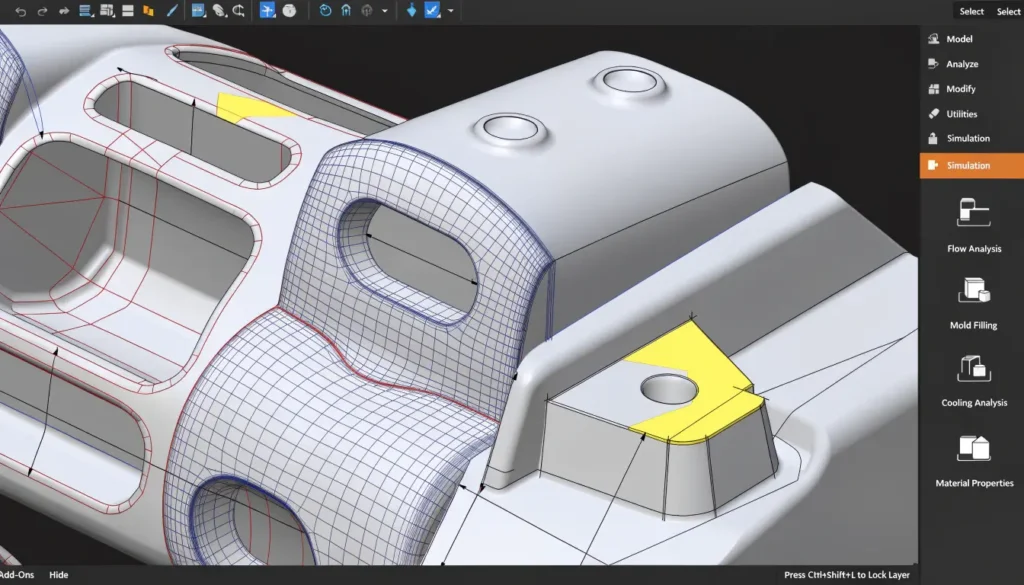
Automotive component CAD model prepared for DFM review

Choose the Installed Environment

These pages focus on part-specific questions, manufacturing assessment, and evidence—not a repeated description of services or polymer families.

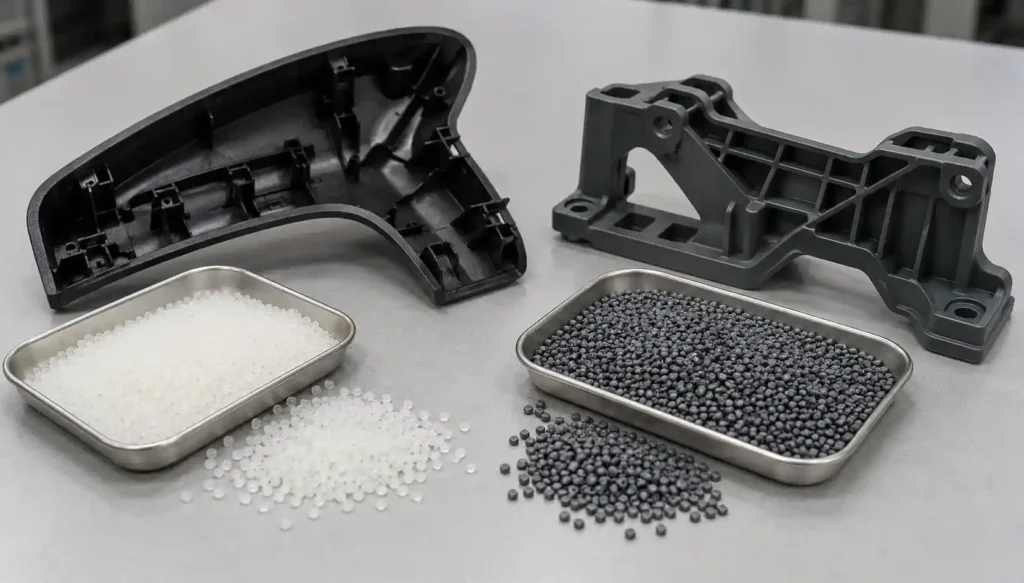
ABS and PC ABS materials for automotive molded components

Automotive Interior Plastic Components

Interior parts face occupant contact, heat cycling, vibration, cleaning chemicals, odor and VOC expectations, sunlight through glazing, squeak-and-rattle risk and closely judged appearance. Hidden carriers and Class-A trim require different priorities.

PP and filled PP materials for automotive injection molded parts

Automotive Exterior Plastic Components

Exterior components see UV, rain, road splash, temperature cycling, stone impact, cleaners, fuels or oils depending on location, and visible color or gloss requirements. Attachment design must tolerate body movement and assembly variation.

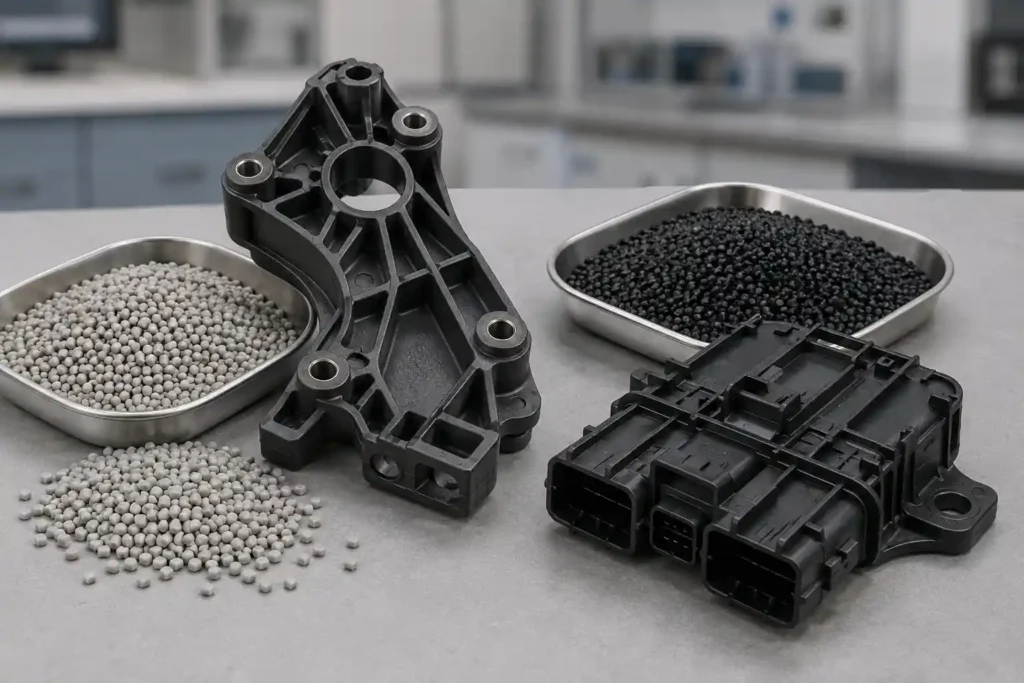
Glass filled PA6 and PA66 for automotive molded parts

Under-the-Hood Plastic Components

Temperature peaks, long-term heat aging, engine fluids, humidity, vibration, creep under bolt load and repeated service assembly can be more important than initial room-temperature strength.

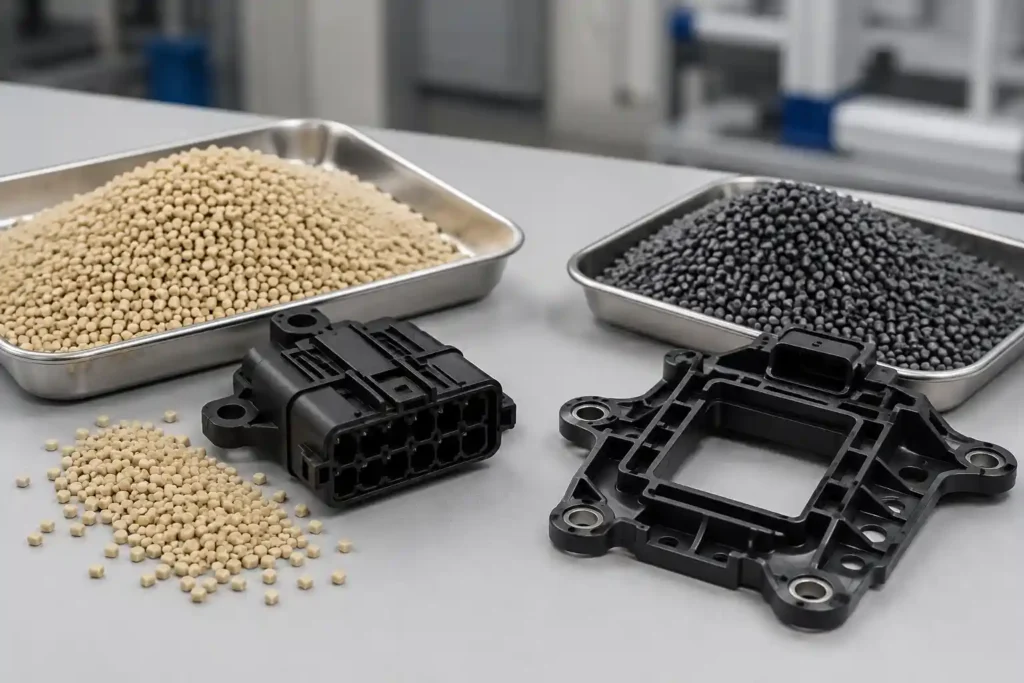
Reinforced PBT and PET for automotive electrical components

EV & Automotive Electrical Components

Electrical parts can face heat, humidity, vibration, tracking risk, assembly loads, sealing, flame requirements and very small positional tolerances. EV components may also require stringent cleanliness and material traceability.

Information That Changes the Manufacturing Plan

Location and exposure

Temperature, UV, fluids, humidity, vibration, impact, cleanliness, flame, electrical, chemical, and occupant-contact conditions.

Interfaces and appearance

Datums, clips, inserts, seals, connectors, gap/flush, grain, color, gloss, coating, gate/weld-line boundaries, and assembly force.

Approval evidence

Exact material grade, conditioning, dimensions, boundary samples, functional tests, PPAP elements, customer forms, and decision authority.

Use Services and Materials as Supporting Resources

The application pages explain what the part must survive. The service pages explain how a DFM, mold, transfer, second-source, production, insert/assembly, or export-mold project is executed. The materials page compares polymer-family considerations, but final approval remains grade-, thickness-, process-, and test-specific.
Describe the Part in Its Actual Vehicle Environment

Begin with the part location, function, current stage, and known approval requirements. Detailed files can follow after the initial routing review.

Request a Quick Quote

Send your drawings and detailed requirements via:
Email: jerry@ckmold.com

Or fill out the contact form below:

We will contact you within one working day. Please pay attention to the email with the suffix “@ckmold.com”

Wait, We Have Something Special for You!

Join our mailing list and receive a 10% discount on your next mold or CNC project.