
Vehicle-Environment Review
Under-the-Hood Plastic Components for Heat, Fluids and Vibration
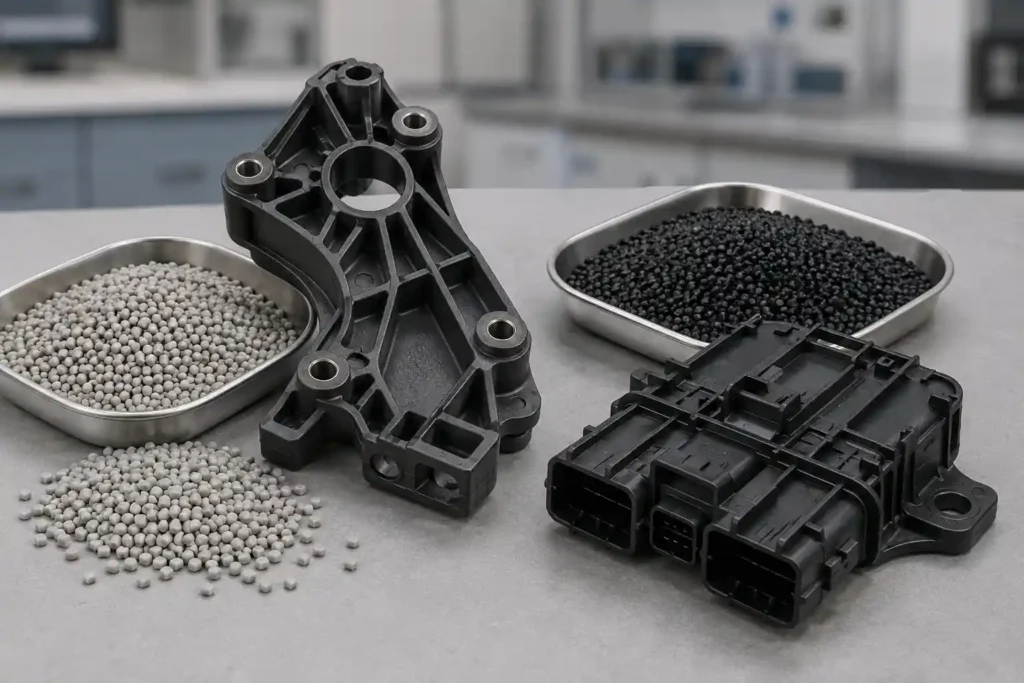
Typical work includes brackets, covers, clips, ducts, fluid-management supports, sensor mounts, electrical housings and structural components outside safety-critical systems defined by the customer.
Installed Conditions and Common Failure Drivers
Temperature peaks, long-term heat aging, engine fluids, humidity, vibration, creep under bolt load and repeated service assembly can be more important than initial room-temperature strength.
Questions to Answer Before DFM and Quotation
The customer supplies the applicable vehicle, OEM, legal, and product-safety requirements.
What is the real thermal profile?
Define peak and continuous temperatures, heat-aging duration, thermal cycling, nearby heat sources, conditioning state, and whether loads remain applied during exposure.
Which fluids and loads apply?
Identify oil, fuel, coolant, cleaners, humidity, pressure, vibration, bolt load, insert torque, creep duration, service cycles, and failure criteria.
Which functions are safety critical?
The customer must classify pressure, sealing, electrical, structural, or vehicle-safety functions and provide applicable standards and approval authority.
Manufacturing Assessment for This Application
The exact geometry, grade, mating parts, finish, and test plan determine which risks apply.
Conditioned material behavior
Evaluate the exact reinforced PA, PBT/PET, PPS, or other grade for moisture, heat, chemical exposure, creep, weld-line strength, hydrolysis, and processing limits.
Load path and fiber orientation
Review bosses, inserts, radii, knit lines, gate location, fiber-driven shrinkage/warpage, sealing surfaces, and connector or bracket alignment.
Tool wear and process discipline
Assess abrasive/corrosive resin effects, steel, venting, drying, residence time, hot-runner suitability, cooling, and contamination control.
Material Selection Boundary
Glass-filled PA6/PA66, reinforced PBT/PET, PPS and other high-temperature engineering grades are considered according to heat, moisture, chemical and electrical needs. Moisture conditioning, weld-line strength and fiber orientation can materially change performance.
Final selection must follow the controlled drawing and applicable approved-material requirements for the exact grade, color, reinforcement, thickness, conditioning, processing, and validation plan. Material-family guidance is not a product approval.
Validation Basis to Define
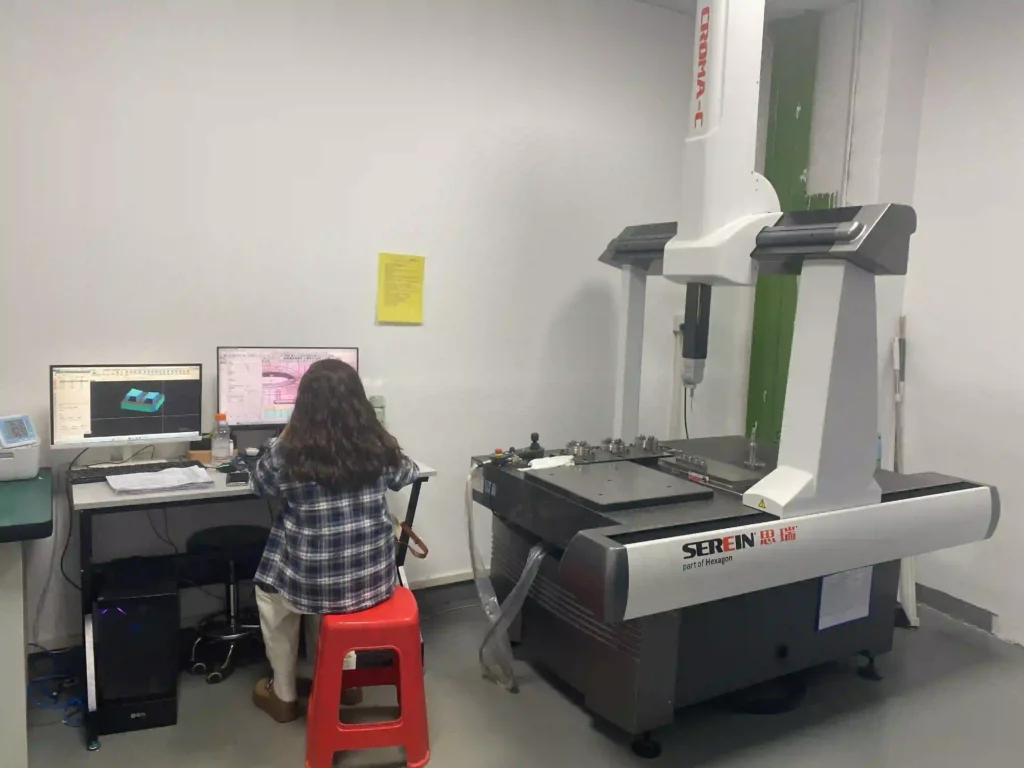
- Dimensions measured at the drawing-specified conditioning state and time, with cavity and datum control.
- Torque, pull-out, creep, pressure/leak, vibration, thermal aging/cycling, and fluid-exposure results when required.
- Exact material-grade certificates/data and recorded drying/processing conditions for validation lots.
- Assembly, sealing, electrical, or durability evidence against the customer-controlled standard and acceptance method.
Test standard, specimen or finished-part requirement, conditioning, sample quantity, laboratory, acceptance limit, and approval owner must be assigned before testing.
Best-Fit Project Route
Under-hood work normally starts with application-specific DFM and material/process review; insert molding or repeat production is selected only after loads and validation responsibilities are clear.
Use the materials guide for polymer-family context and the services hub for the stage-specific workflow.
Review Under-the-Hood Plastic Components Requirements
Send the part location, function, current stage, and available drawing/material/validation baseline for an application-specific manufacturing review.