
Automotive Material Selection
Automotive Injection Molding Materials by Application Risk
Automotive material selection connects the service environment, geometry, tool, process and validation plan. Polymer-family properties are a starting point—not a finished-part guarantee.
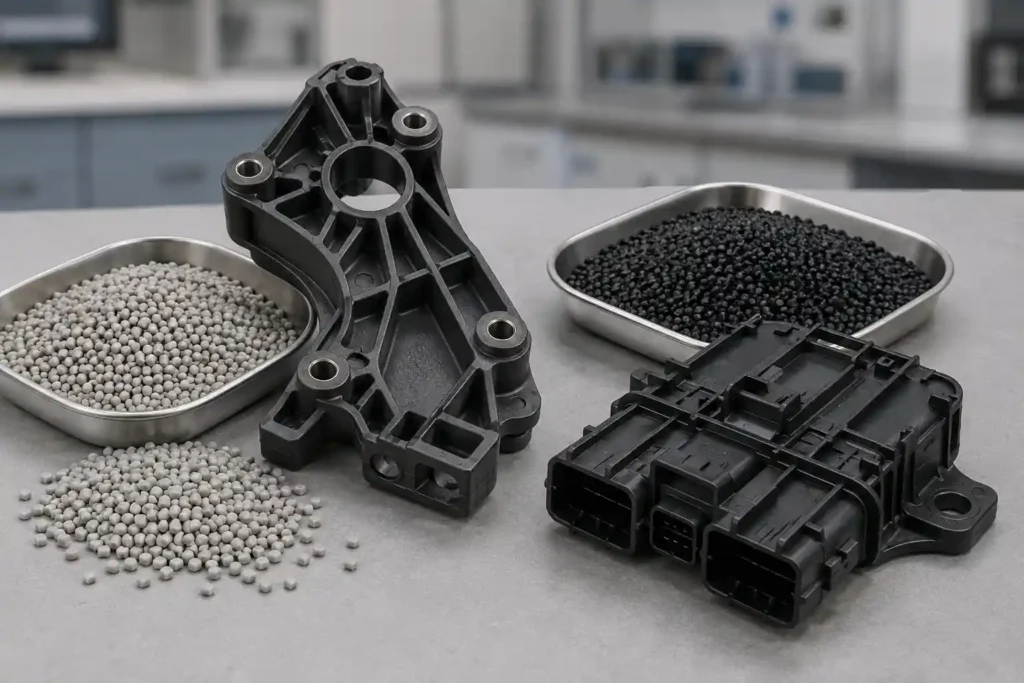
Select From the Application Backward
Begin with interior, exterior, under-hood or EV/electrical exposure; then define heat, impact, long-term creep, moisture, fluids, UV, flame, appearance and dimensional requirements. The choice must also account for wall thickness, ribs, weld lines, fiber orientation, shrinkage, warpage and available test methods.
Final selection should follow the customer drawing, applicable OEM-approved material list, the exact grade datasheet and representative testing. A trade name or polymer abbreviation alone does not define performance.
Automotive Material Families
The summaries identify questions to investigate; they do not approve a material for a vehicle component.
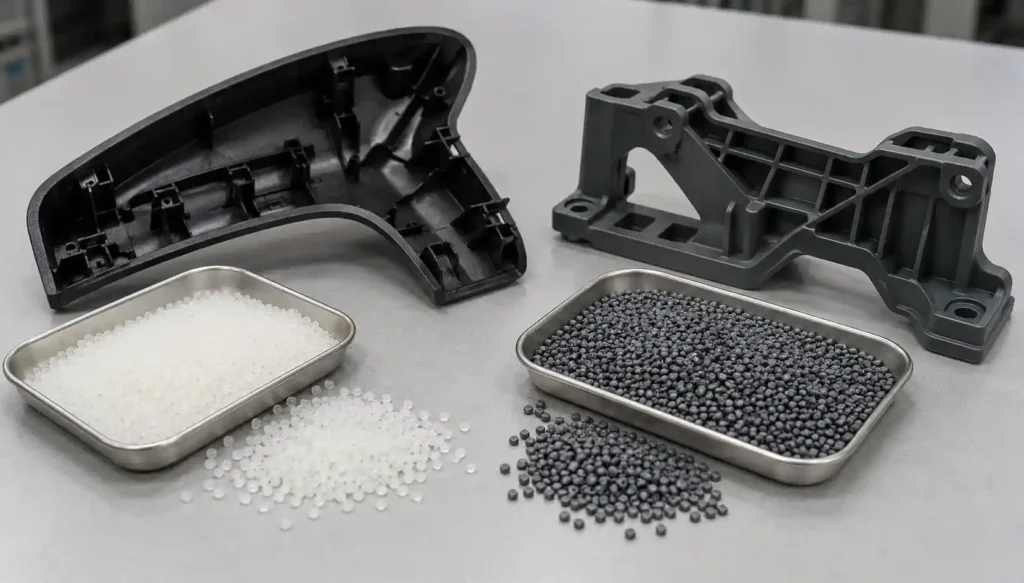
PP and talc-filled PP
Interior trim, carriers, covers and some exterior parts where low density, chemical resistance, processability and cost are important. Talc can improve stiffness and dimensional control but can reduce impact or affect appearance and warpage.
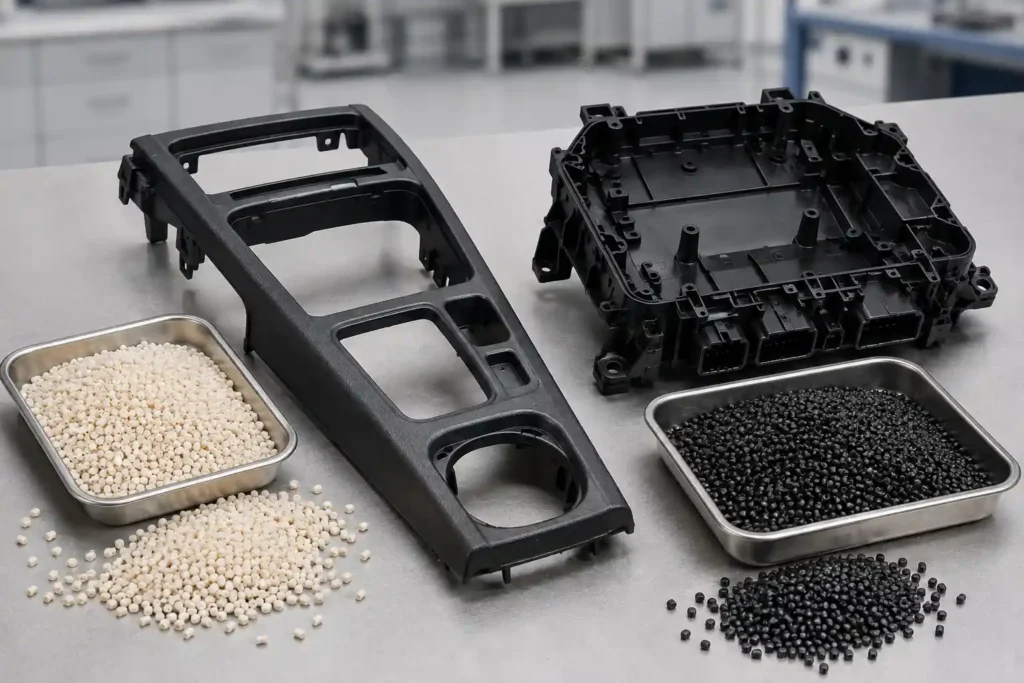
ABS and PC/ABS
Interior bezels, housings and trim requiring appearance, impact and heat balance. Grade selection must consider UV, emissions, plating or painting, stress cracking and service temperature.
Glass-filled PA6 and PA66
Under-hood brackets, clips and structural parts requiring heat and strength. Moisture absorption, conditioning, hydrolysis, weld-line strength, creep and fiber orientation require special attention.
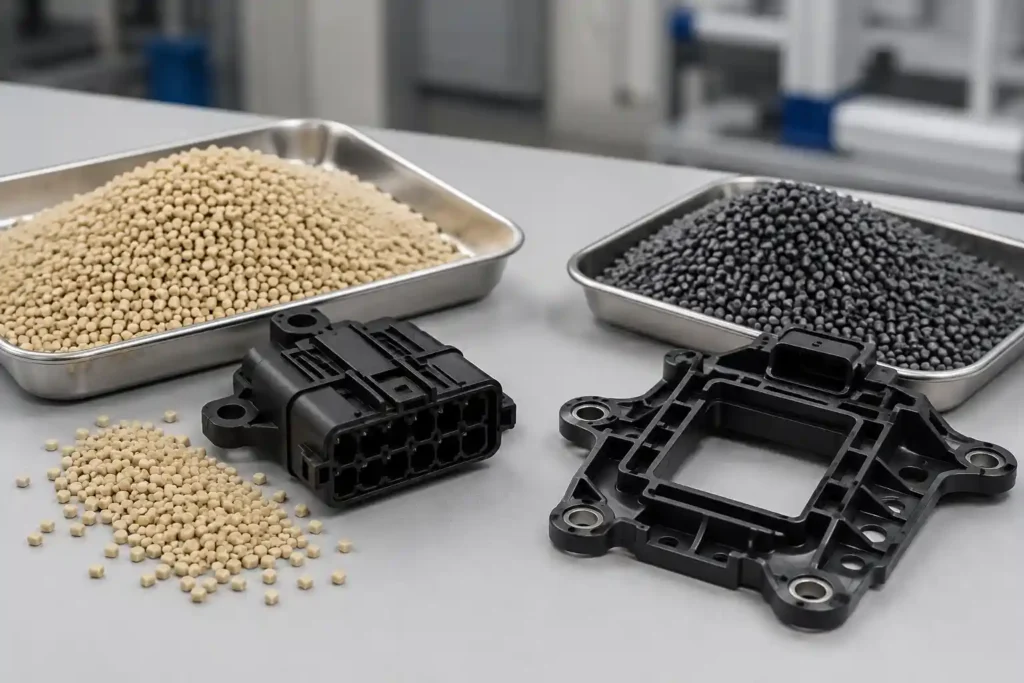
Reinforced PBT and PET
Electrical housings, connectors and dimensionally controlled components. Review hydrolysis, flame grade, CTI, heat, moisture, glass orientation and thin-wall filling for the exact grade.
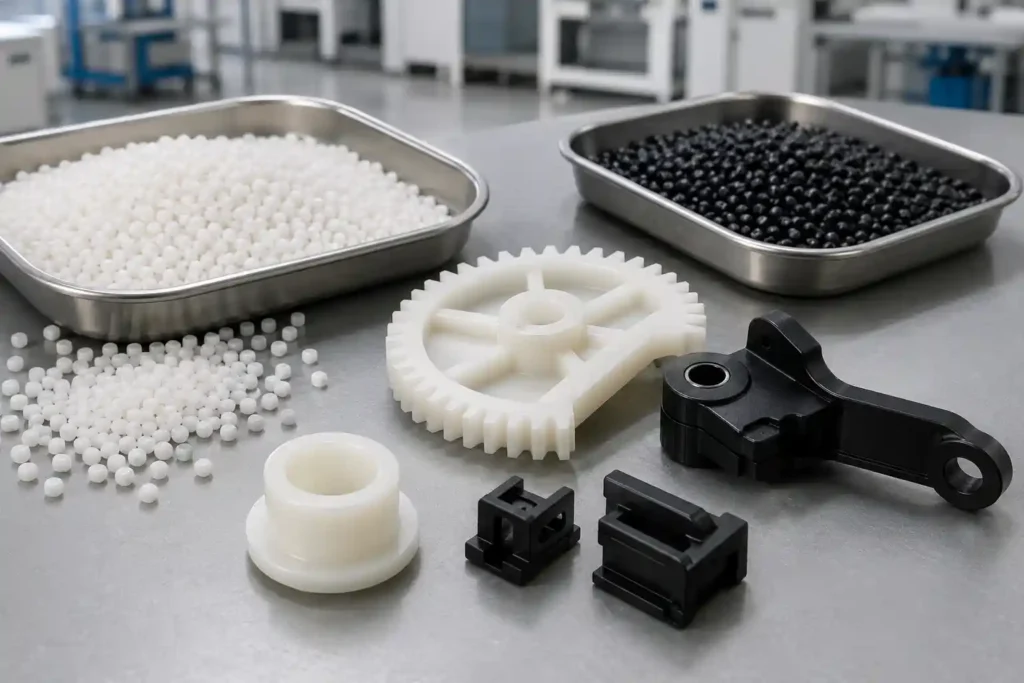
POM
Precision mechanisms, clips and low-friction features. Creep, chemical compatibility, dimensional tolerance, formaldehyde risk from poor processing and bonding limitations should be understood.
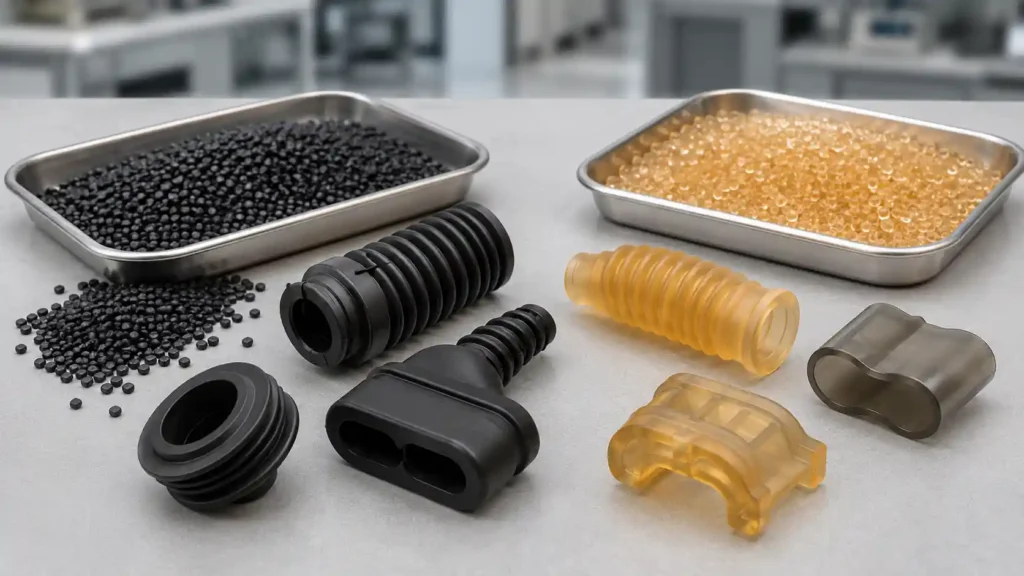
TPE and TPU
Seals, grips, grommets and overmolded flexible features. Hardness, compression set, chemical exposure, UV, adhesion and substrate preparation are grade-specific.
PPS and other high-temperature polymers
Electrical or under-hood applications with demanding heat, chemical or dimensional requirements. High material cost, brittleness, flash, wear, venting and processing controls often dominate feasibility.
Application Comparison
- Interior: appearance, emissions, heat behind glazing, impact, scratch, squeak-and-rattle and assembly feel.
- Exterior: UV, weather, low-temperature impact, water, chemicals, paint or coating and long-span warpage.
- Under-hood: heat aging, fluids, moisture, vibration, creep under load and repeated service.
- EV/electrical: dielectric and tracking requirements, flame grade, heat, humidity, terminal position, cleanliness and sealing.
Where an OEM-approved material list applies, the released grade and supplier must match the program requirement unless a formal deviation is approved.
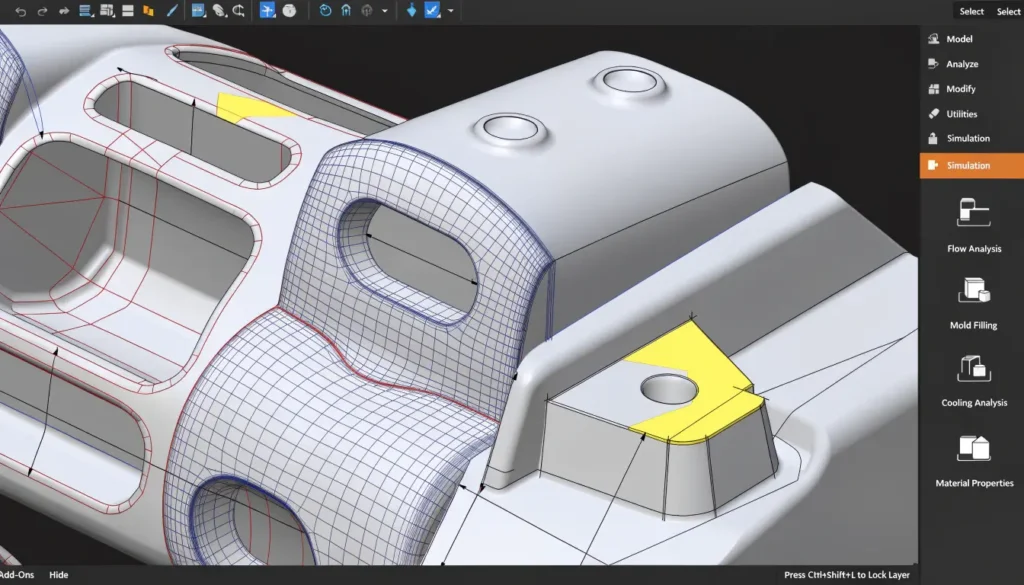
Properties That Change Tool and Part Behavior
Shrinkage and warpage
Packing, cooling, wall distribution, gate location and fiber orientation interact with grade-specific shrinkage. Tool dimensions should use more than a generic handbook value.
Moisture and conditioning
Drying protects processing; conditioning changes final dimensions and properties for hygroscopic materials. Measurement timing must be defined.
Heat, creep and impact
Short-term datasheet strength does not predict long-term bolt load, thermal cycling or low-temperature impact in the finished geometry.
Chemical and UV exposure
Resistance varies with grade, stress, temperature, concentration and time. Finished-part testing may be necessary.
Flammability and electrical data
Ratings are tied to a specific grade, color, thickness and test listing. Confirm the actual application standard and evidence.
Cost and supply continuity
Resin price, minimum order, approved source, color compounding, recycled-content rules and regional availability affect sourcing risk.
Information Needed for a Material Review
- Part CAD and drawing with wall, tolerances and critical dimensions
- Vehicle location and maximum/minimum service temperatures
- Mechanical load, impact, creep and assembly requirements
- Fluid, UV, humidity, flame and electrical requirements
- Appearance, color, texture, paint, plating or bonding needs
- OEM material specification or approved grade list
- Annual volume, expected life and required validation tests
When the grade is already specified, AutoMoldingPro reviews manufacturability and processing implications rather than silently substituting another resin.
Frequently Asked Questions
Practical answers for engineering and sourcing teams.
Can AutoMoldingPro choose the final material?
We can support a manufacturing-focused comparison, but the design owner approves the final grade against vehicle requirements and test evidence.
Why can two grades with the same polymer name mold differently?
Reinforcement, impact modifier, flame package, viscosity, color and supplier formulation change flow, shrinkage, warpage and performance.
Are recycled grades suitable for automotive parts?
Only where the customer specification, approved grade and validation plan permit them. Lot consistency and traceability must be considered.
Related Engineering Resources
- All automotive molding services
- Automotive component applications
- Quality and validation
- Automotive molding materials
For a project-specific review, send the current CAD, drawing, resin, volume and validation expectations through our DFM and quote form.
Review the Exact Grade With the Part Geometry
Send your CAD, drawing, material, annual volume, target timing and validation requirements. AutoMoldingPro will review feasibility, open questions and the appropriate next step.