
Vehicle-Environment Review
EV & Automotive Electrical Plastic Components
Programs may include connector and sensor housings, insulating carriers, busbar supports, covers, brackets and overmolded electrical subcomponents. The customer must identify voltage class and safety-critical functions.
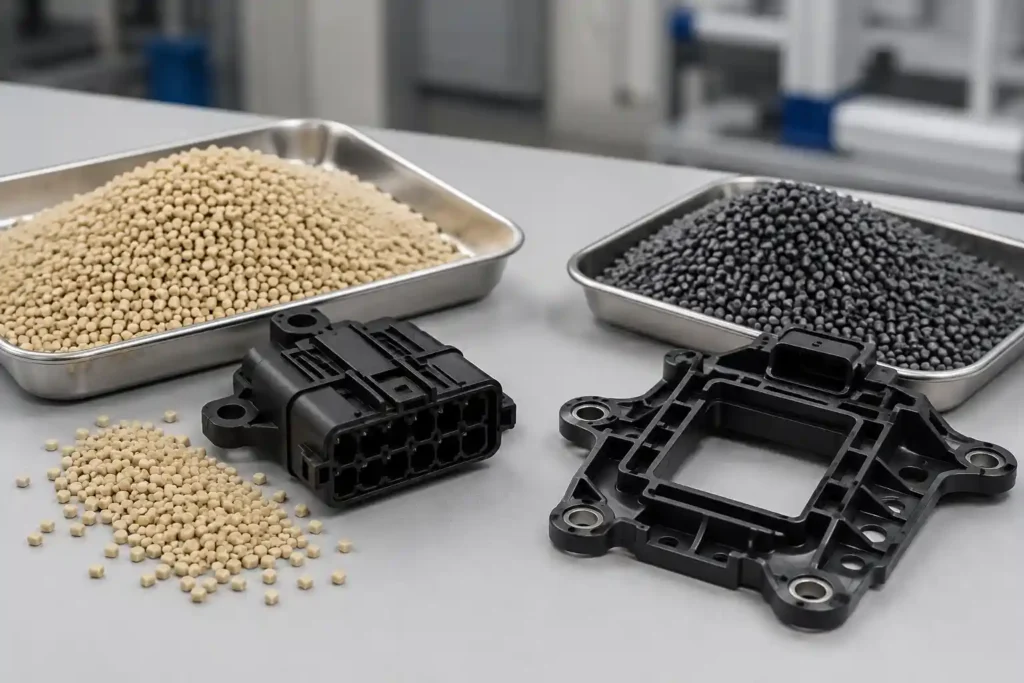
Installed Conditions and Common Failure Drivers
Electrical parts can face heat, humidity, vibration, tracking risk, assembly loads, sealing, flame requirements and very small positional tolerances. EV components may also require stringent cleanliness and material traceability.
Questions to Answer Before DFM and Quotation
The customer supplies the applicable vehicle, OEM, legal, and product-safety requirements.
What voltage and safety class applies?
The customer defines voltage, insulation function, creepage/clearance requirements, touch safety, flame standard, CTI, dielectric criteria, and approval authority.
What must remain clean and positioned?
Identify terminals, busbars, pins, seals, connector datums, prohibited flash/contamination zones, position tolerances, retention, plating, packaging, and traceability.
Which environmental seals and loads apply?
Provide heat, humidity, vibration, thermal cycling, pressure/leak, chemical, assembly, service, and cleanliness requirements for the installed location.
Manufacturing Assessment for This Application
The exact geometry, grade, mating parts, finish, and test plan determine which risks apply.
Grade- and thickness-specific material review
Evaluate exact resin grade, color, reinforcement, flame recognition, CTI, moisture, hydrolysis, heat, and processing window. A polymer-family name is not compliance evidence.
Electrical-interface moldability
Review customer-supplied creepage/clearance interfaces, thin ribs, shutoffs, venting, weld lines, flash, pin protection, fiber shift, sealing, and terminal movement.
Insert and process controls
Define terminal/insert incoming limits, loading detection, mistake proofing, cavity pressure/process control, cleanliness, handling, and reaction to a misload.
Material Selection Boundary
Reinforced PBT/PET, PA, PPS, PC blends and flame-retardant grades are selected against the exact temperature, dielectric, CTI, flammability, moisture and mechanical requirements. UL recognition applies to a specific grade and thickness—not generically to a polymer family.
Final selection must follow the controlled drawing and applicable approved-material requirements for the exact grade, color, reinforcement, thickness, conditioning, processing, and validation plan. Material-family guidance is not a product approval.
Validation Basis to Define
- Terminal/insert position, critical dimensions, flash, damage, cleanliness, cavity, and lot traceability results.
- Retention, torque, leak/sealing, dielectric, insulation-resistance, or other customer-defined functional tests.
- Exact grade and applicable thickness evidence for flame, CTI, temperature, or electrical claims; third-party scope assigned where required.
- Approved process/material condition and change control for terminals, plating, resin, regrind, drying, mold, and assembly.
Test standard, specimen or finished-part requirement, conditioning, sample quantity, laboratory, acceptance limit, and approval owner must be assigned before testing.
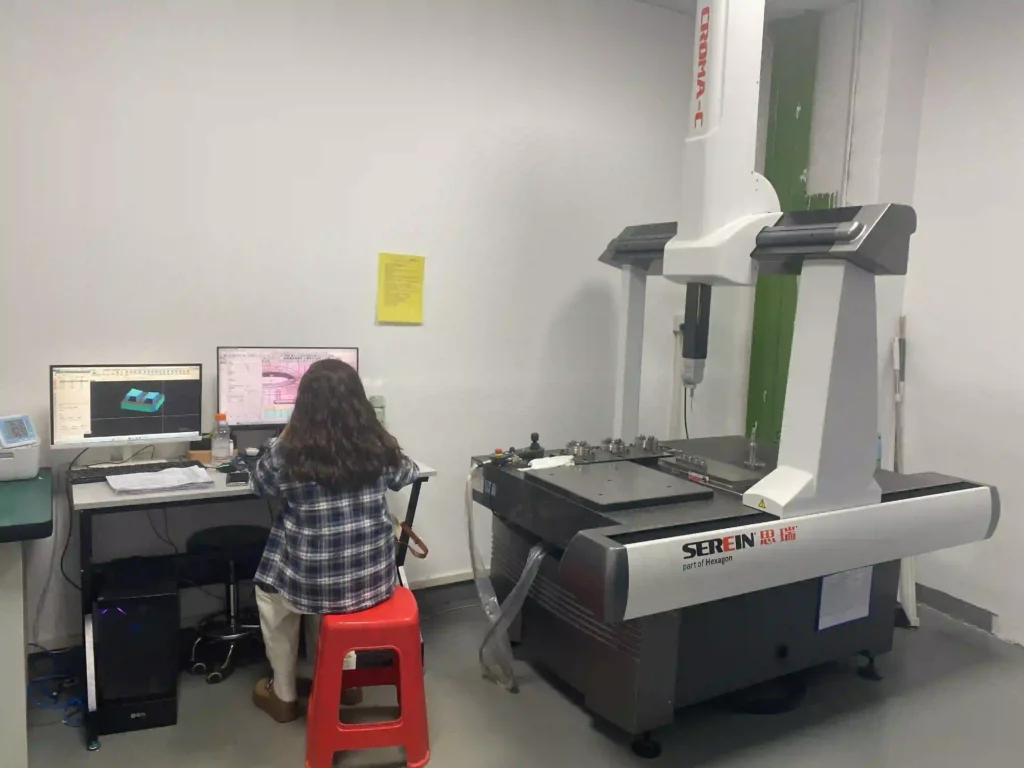
Best-Fit Project Route
EV/electrical parts often combine application review with DFM and insert molding; production release depends on customer-defined electrical and safety evidence, not a generic automotive label.
Use the materials guide for polymer-family context and the services hub for the stage-specific workflow.
Review EV & Electrical Components Requirements
Send the part location, function, current stage, and available drawing/material/validation baseline for an application-specific manufacturing review.